
Serious Games, Serious Impact?
Educational games can enhance engagement and build clinical reasoning skills
by Lindsey Wescovich, PGY1 Community Pharmacy Resident, Mississippi State Department of Health Pharmacy
Games have always been a fun, interactive way to facilitate learning in my experience as a student. This started for me in pre-school using matching games to learn colors and the LeapFrog LeapPad1 to learn how to read (if you know, you know). This progressed through all the stages of my life as a learner. School-approved games were always a treat that I wanted extra time to complete in elementary and middle school. In high school, I looked forward to teacher-led Bingo to tie in with that day’s lesson. Throughout college and even pharmacy school, I was thrilled when gamified learning activities were used in the classroom –like Jeopardy, Kahoot, and Blooket. Even now, during my residency, preceptors use games as tools for me and fellow learners. Games and learning have co-existed through my entire life and probably yours, too. Playing games in the spirit of learning does not feel boring or mentally strenuous and helps me master the material. What a win-win!
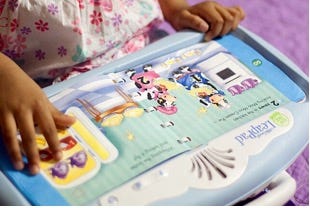
But using games for teaching and learning poses a few questions for me. Are games beneficial for learning? Are some games better for teaching and learning than others? How does this fit into teaching and learning in the health professions?
As it turns out, there is a lot of research supporting the use of games in the classroom. A 2016 meta-analysis found a statistically significant effect of positive learning outcomes comparing the use of digital games and traditional (non-game) instruction for students of all ages, spanning from kindergarten through undergraduate education.2 These studies incorporated just about any game that could be used for an educational purpose! This includes serious games which are games designed primarily for educational purposes rather than entertainment.3 Constructivist learning theory reinforces the results of this research by promoting active learning through experiences and problem-solving, which align closely with the design of educational games.4
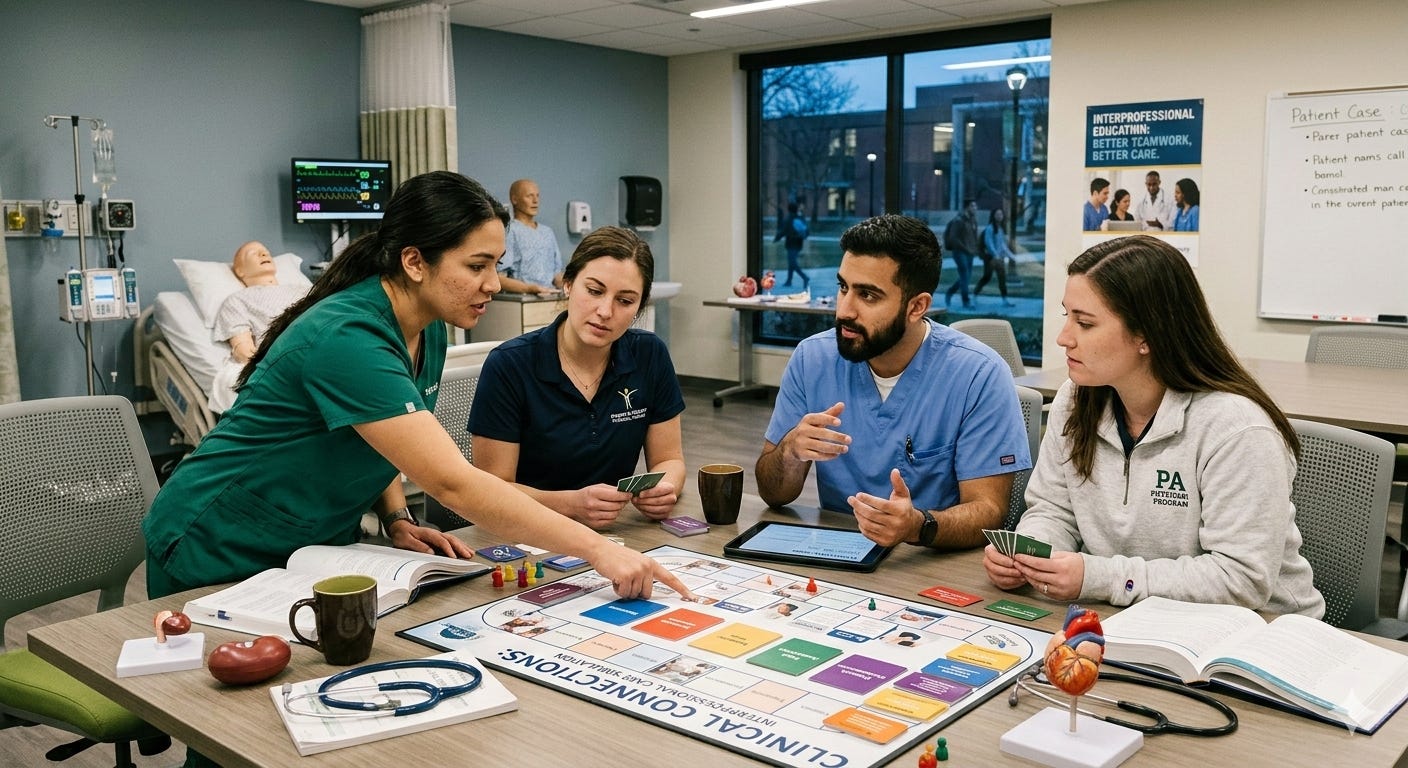
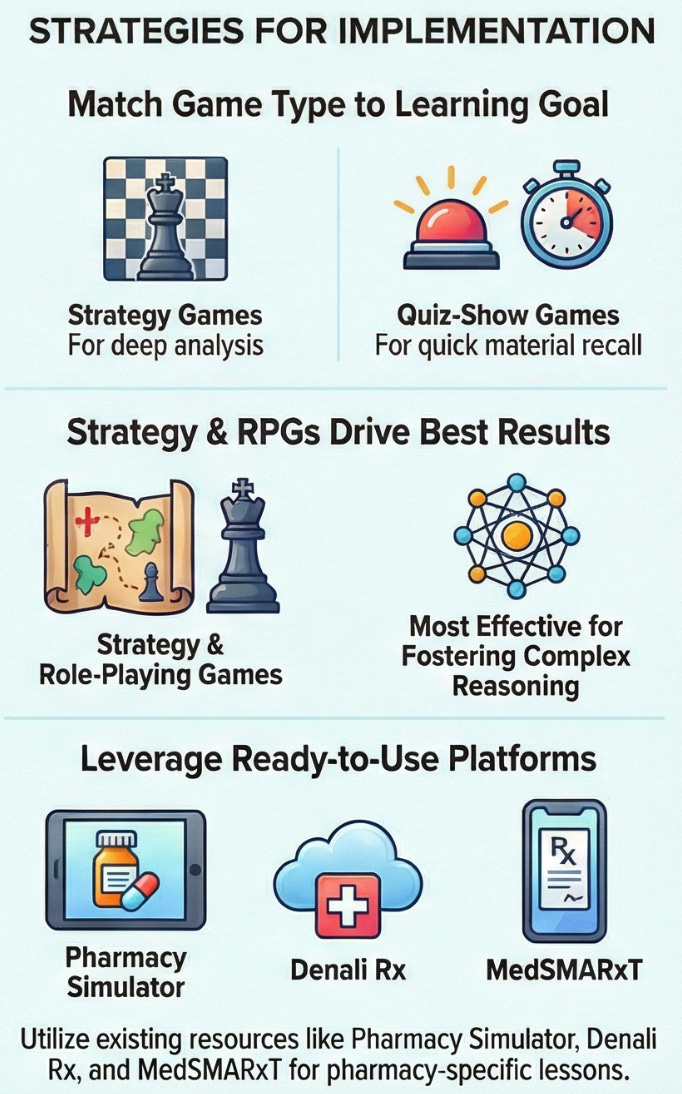
Are there any types of games that are better suited for teaching and learning purposes? What types of games should teachers use that are most likely to be conducive to learning? A large meta-analysis of digital educational games found that their effectiveness may vary by game type, with strategy games often showing the most effectiveness, followed by role-playing games, puzzles, and adventure games.5 Although this meta-analysis focused on games used to teach STEM subjects, the cognitive skills fostered by strategy and role-playing games are equally valuable for enhancing clinical reasoning in health professions education. The bottom line: games that require active thinking about the material being taught tend to yield the best results when it comes to learning outcomes, so my advice is to use games when the goal is deep thinking, analysis, and problem-solving. Retrieval or quiz-show-like games can be used when the goal is reviewing (or recalling) material, like Kahoot or Jeopardy.
How have games been used in health professional education? According to one research article, there is support for some games, and these games may be better for this learner population.3 Serious games offer an engaging, interactive way for health professional learners to develop knowledge, clinical reasoning, and teamwork skills, and are similar to video games or simulations for real-world encounters. Shrivastava et al. note that integrating serious games into medical education enhances learning outcomes and prepares students for real-world clinical practice.3
Furthermore, a randomized controlled trial studying serious games in a nursing program noted that a serious game may strengthen students’ confidence and clinical decision-making during an internal medicine rotation.6 Students were randomized to either play a one‑week, scenario‑based game focused on managing diabetic ketoacidosis (n = 30) or continue with clinical training alone (n = 30). Compared with the control group, students who were assigned to the game group demonstrated greater improvements in self‑confidence with a statistically significant difference between the intervention and control groups using a six-point scale (1= not at all to 6=totally confident). The mean self-confidence score was 4.53 in the game group versus 3.81 (p<0.001) at the conclusion of the rotation. However, anxiety levels did not show a statistically significant difference between groups. Overall, the findings suggest that serious games may reinforce clinical learning when coupled with traditional clinical education.
Incorporating games into your teaching is an evidence-based tool to increase active engagement and improve learner performance in practically any setting. Start small. Replace one review session or an active engagement exercise with a game and see for yourself what the benefit are for learners. The great news for pharmacy (and other health professions) educators is that ready-to-use serious game platforms already exist. I encourage you to take advantage of these resources, play a few, and maybe even create your own!
Resources
Serious Games for Pharmacy Educators
Pharmacy Simulator. Pharmacy simulator for pharmacy students’ learning. Accessed February 18, 2026. https://www.pharmacysim.com/
The Pharmacy Game. Serious game for pharmacy education. Accessed February 18, 2026. https://pharmacygame.education/
Denali Rx. eLearning games. Accessed February 18, 2026. https://denalirx.com/elearning-games/
University of Kentucky College of Pharmacy. MedSMARxT: Adventures in PharmaCity. Accessed February 18, 2026. https://pharmacy.uky.edu/crome/medsmart-games/medsmarxt-adventures-pharmacity
References
Patel D. A touchscreen LeapPad [photograph]. March 27, 2009. Wikimedia Commons. Accessed February 23, 2026. https://commons.wikimedia.org/wiki/File:LeapPad_electronic_tablet_for_kids.jpg

Clark DB, Tanner-Smith EE, Killingsworth SS. Digital games, design, and learning: a systematic review and meta-analysis. Rev Educ Res. 2016;86(1):79-122. doi:10.3102/0034654315582065
Shrivastava SR, Shrivastava PS, Mishra VH. Serious games in medical education: what it adds? how to go about it? J Pharm Bioallied Sci. 2024;16(suppl 2):S1860-S1862. doi:10.4103/jpbs.jpbs_1245_23
McLeod S. Constructivism Learning Theory & Philosophy of Education. SimplyPsychology. Published March 31, 2025. Accessed February 23, 2026.
Gui Y, Cai Z, Yang Y, Kong L, Fan X, Tai RH. Effectiveness of digital educational game and game design in STEM learning: a meta-analytic review. Int J STEM Educ. 2023;10:36. doi:10.1186/s40594-023-00424-9
Calik A, Kapucu S. The effect of serious games for nursing students in clinical decision-making process: a pilot randomized controlled trial. Games Health J. 2022;11(1):30-37. doi:10.1089/g4h.2021.0180